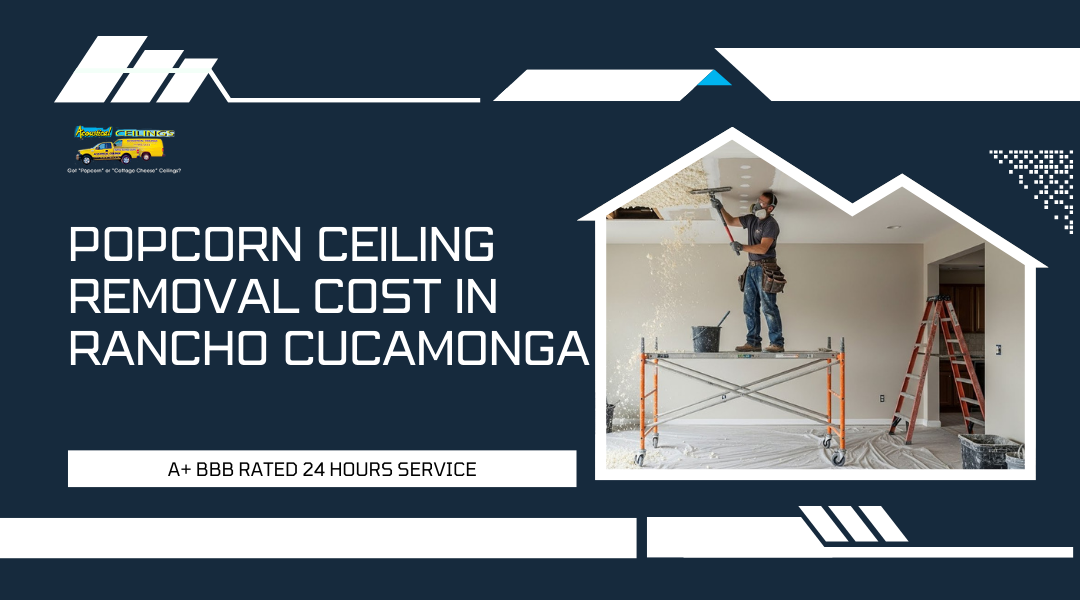
Popcorn ceilings were a popular choice in homes built from the 1950s through the 1980s, but many Rancho Cucamonga homeowners now want them gone. These textured ceilings can make your home look dated and are hard to clean and maintain. In Rancho Cucamonga, you can expect to pay between $1.25 to $2.50 per square foot for professional popcorn ceiling removal, though the final cost depends on factors like your ceiling’s condition, room size, and whether asbestos testing is needed.
Understanding the costs involved helps you plan your budget and avoid surprises. The price you pay depends on several things, including whether your ceiling contains asbestos, how much prep work is needed, and what type of finish you want afterward. Homes built before the 1980s may need asbestos testing, which adds to the total expense.
This guide breaks down what you should expect to pay in Rancho Cucamonga. You’ll learn about the main factors that affect pricing, what the removal process looks like, and whether hiring a professional or doing it yourself makes sense for your situation.
Average Popcorn Ceiling Removal Cost in Rancho Cucamonga
Popcorn ceiling removal costs in Rancho Cucamonga typically range from $1 to $3 per square foot for basic removal, with total project costs varying based on room size and ceiling condition. Local contractors in the area charge rates that align closely with Southern California averages, though specific prices depend on whether asbestos testing is required and what type of refinishing you choose.
Typical Price Range Per Square Foot
The cost to remove popcorn ceiling in Rancho Cucamonga runs between $1 and $3 per square foot for standard removal work. This price covers scraping the texture off your ceiling and basic cleanup.
If your home was built before 1980, you’ll need asbestos testing first. Testing adds $200 to $400 to your total cost. When asbestos is present, professional removal jumps to $3 to $7 per square foot because contractors must follow strict safety procedures.
Additional refinishing work increases the price. Applying new drywall mud and texture costs an extra $0.50 to $1.50 per square foot. Painting the finished ceiling adds another $1 to $2 per square foot.
Cost for Different Room Sizes
Here’s what you can expect to pay for common room sizes in Rancho Cucamonga:
| Room Type | Square Footage | Basic Removal Cost | With Refinishing |
|---|---|---|---|
| Small bedroom | 120-150 sq ft | $120-$450 | $300-$750 |
| Master bedroom | 200-300 sq ft | $200-$900 | $500-$1,500 |
| Living room | 300-400 sq ft | $300-$1,200 | $750-$2,000 |
| Large open space | 500-600 sq ft | $500-$1,800 | $1,250-$3,000 |
These prices assume asbestos-free ceilings with standard 8-foot heights. Vaulted or higher ceilings increase labor costs by 20 to 40 percent.
Comparison to National Averages
Rancho Cucamonga’s popcorn ceiling removal costs fall slightly above the national average. The national average ranges from $1 to $2.50 per square foot, while local rates reach up to $3 per square foot.
This difference reflects higher labor costs in Southern California. Contractors in the Inland Empire charge $50 to $80 per hour compared to the national average of $40 to $65 per hour.
Your total project cost in Rancho Cucamonga typically runs 10 to 25 percent higher than costs in other parts of the country. A project that costs $1,500 nationally might cost $1,650 to $1,875 in your area.
Key Factors Affecting Popcorn Ceiling Removal Cost
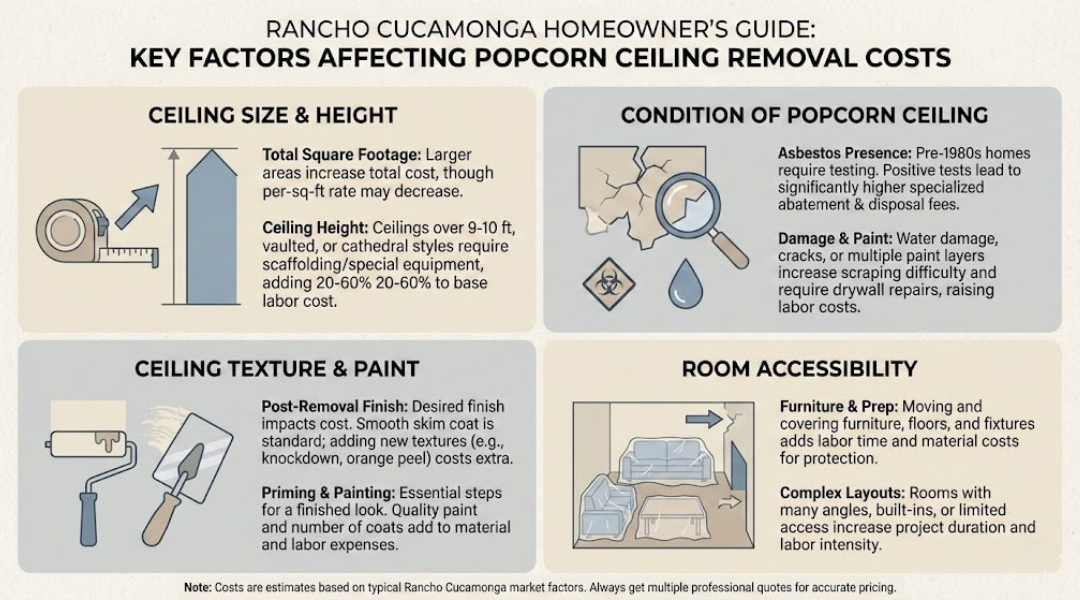
The cost to remove popcorn ceilings in Rancho Cucamonga depends on several specific factors that professionals evaluate before providing estimates. Understanding these variables helps you anticipate what your project will cost and why prices vary between different rooms in your home.
Ceiling Size and Height
Your ceiling’s square footage directly impacts the cost of popcorn ceiling removal. Contractors typically charge between $1 and $3 per square foot for standard removal work. A small bedroom with 120 square feet of ceiling space costs significantly less than a living room with 400 square feet.
Ceiling height adds another cost layer to your project. Standard 8-foot ceilings require basic ladders and equipment. Vaulted or cathedral ceilings above 10 feet need scaffolding or specialized equipment, which increases labor time and costs.
The combination of size and height determines how long workers spend on your project. A 300-square-foot room with 12-foot ceilings takes more time than the same size room with 8-foot ceilings.
Condition of Popcorn Ceiling
The current state of your popcorn ceiling texture affects removal difficulty and cost. Ceilings in good condition with firmly attached texture are easier to remove than deteriorating ones. Peeling, flaking, or water-damaged popcorn ceiling texture requires more careful handling and additional prep work.
Homes built before 1980 may have asbestos in the ceiling material. Testing for asbestos adds to your initial costs, and confirmed asbestos presence dramatically increases removal expenses. Professional asbestos removal requires specialized containment, safety equipment, and disposal at approved facilities.
Water stains or structural damage beneath the popcorn ceiling may need repair before finishing work begins. These repairs add extra costs beyond basic removal.
Ceiling Texture and Paint
Multiple layers of paint on your popcorn ceiling make removal more difficult. Unpainted popcorn ceiling texture scrapes off more easily when dampened with water. Painted surfaces resist moisture absorption and require more aggressive scraping techniques.
The type of paint matters too. Latex paint is somewhat easier to work with than oil-based paint. Each additional paint layer extends removal time and increases labor costs.
Some textured ceilings have thicker or denser application than others. Heavy texture applications take longer to remove completely and may require additional passes with scraping tools.
Room Accessibility
Furniture, fixtures, and built-in features affect how easily contractors can work. Empty rooms with clear floor space cost less because workers can move freely and set up equipment quickly. Rooms with heavy furniture require moving services or careful protection, adding time and expense.
Ceiling fans, light fixtures, and smoke detectors must be removed before work begins. Complex lighting systems or recessed fixtures take more time to disconnect and reinstall. Rooms with many fixtures cost more than simple spaces.
The room’s location within your home matters too. Ground-floor rooms are easier to access for equipment and debris removal than upstairs spaces. Tight hallways or narrow doorways can complicate bringing scaffolding or disposal containers to the work area.
Popcorn Ceiling Removal Process Overview
The popcorn ceiling removal process involves three main stages: protecting your space from dust and debris, scraping away the textured material, and handling disposal properly. Each step requires careful attention to keep your home safe and minimize mess.
Preparation and Site Protection
Before starting your popcorn ceiling removal project, professionals will seal off the work area to prevent dust from spreading throughout your home. They cover floors with plastic sheeting and use tape to secure the edges. All furniture either gets moved out of the room or covered with protective materials.
Light fixtures and ceiling fans need to be removed before any scraping begins. This prevents damage to your fixtures and makes the ceiling surface easier to access. Workers may also turn off HVAC systems to stop dust from circulating through your vents.
The prep stage includes wetting the ceiling texture with water using a spray bottle or pump sprayer. This softens the material and reduces airborne dust during removal. If asbestos testing hasn’t been done yet, professionals will take samples before proceeding with any work.
Scraping and Texture Removal
Workers use wide scraping tools to remove the softened popcorn texture from your ceiling. They work in small sections, applying steady pressure to lift the material without gouging the underlying drywall. The process creates significant debris that falls to the protected floor below.
Stubborn areas may need additional water application and a second pass with the scraper. Some popcorn ceilings were painted over, which makes removal harder and more time-consuming. These surfaces often require more aggressive scraping techniques.
After removing the texture, workers inspect the ceiling for imperfections. They fill nail holes, repair cracks, and smooth rough spots with joint compound. This creates an even surface ready for painting or retexturing.
Cleanup and Waste Disposal
Professional crews collect all scraped material from floor coverings and bag it for disposal. They remove plastic sheeting carefully to avoid spreading dust into other rooms. HEPA vacuums help capture fine particles that regular cleaning might miss.
Standard disposal costs between $150 and $400 when hiring junk removal services. Asbestos-containing material requires specialized disposal by licensed professionals at significantly higher rates of $5 to $20 per square foot.
Most popcorn ceiling removal projects generate several bags of debris. You can rent a dumpster for $350 to $550 per week if you prefer handling disposal yourself. Always inform rental companies if asbestos is present so they follow proper regulations.
Additional Costs and Considerations
Removing popcorn ceilings involves more than just scraping texture off your ceiling. You may need to pay for asbestos testing, repairs to damaged surfaces, and finishing work like painting or applying new texture.
Asbestos Testing and Abatement
Homes built before the 1980s often have popcorn ceilings that contain asbestos. You need to test your ceiling before starting any removal work. Testing costs between $200 and $500 depending on how many samples you send to a lab.’
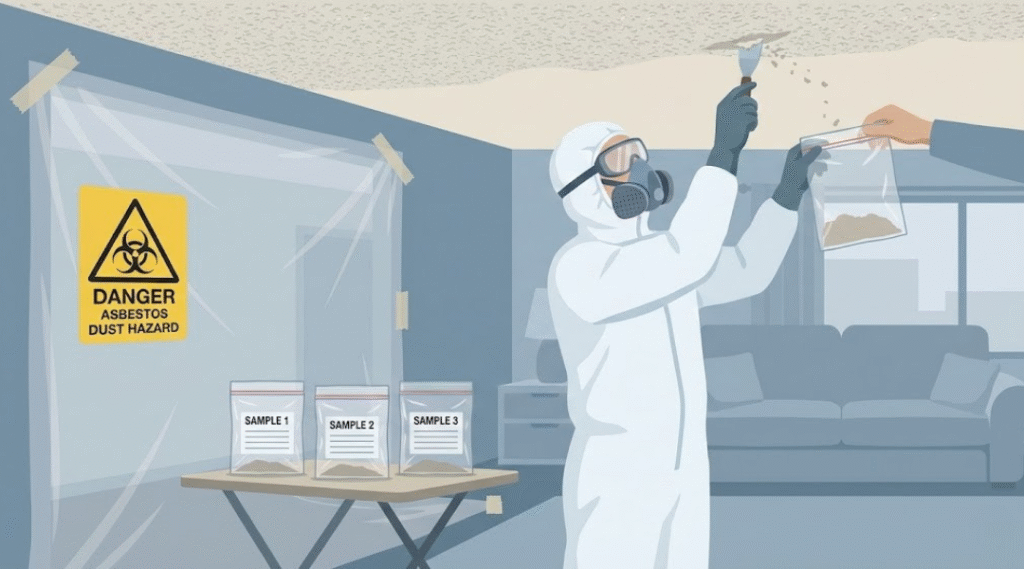
If asbestos is present, you must hire specialized contractors who handle hazardous materials. Standard popcorn ceiling removal companies cannot legally remove asbestos-containing materials. Asbestos abatement costs significantly more than regular removal.
The price for asbestos removal ranges from $15 to $25 per square foot. This process requires special containment procedures and protective equipment. You will need to leave your home during the removal work for safety reasons.
Repairs and Surface Refinishing
After scraping off popcorn texture, your ceiling may have cracks, holes, or uneven areas. Contractors apply multiple layers of drywall mud to create a smooth finish. This refinishing work adds to your total project cost.
Minor repairs cost $50 to $150 per room. Major damage requiring extensive drywall work costs $300 to $800 per room. The age and condition of your ceiling affects how much prep work you need.
Your contractor will sand the ceiling between each layer of mud. This creates dust throughout your home. Professional refinishing ensures your ceiling looks flat and even after painting.
Repainting or New Ceiling Texture
A bare ceiling after popcorn removal needs either paint or new texture. Most homeowners choose a fresh coat of paint for a clean, modern look. Ceiling paint costs $25 to $50 per gallon and covers about 400 square feet.
Professional painting adds $1 to $3 per square foot to your project. Some homeowners prefer applying a subtle texture instead of leaving the ceiling completely flat. Knock-down or orange peel textures cost $1.50 to $2.50 per square foot.
Primer is necessary before painting to seal the drywall mud. You need at least two coats of paint for proper coverage. White or light colors work best for ceilings because they reflect light and make rooms feel larger.
DIY vs. Professional Popcorn Ceiling Removal
Homeowners in Rancho Cucamonga face two main options when tackling popcorn ceiling removal: doing it yourself or hiring a professional. The choice between these approaches depends on your budget, time availability, and comfort level with potential complications.
Cost Differences
DIY popcorn ceiling removal typically costs between $1,500 and $1,800 for an average-sized home. You’ll need to purchase or rent equipment including scrapers, ladders, plastic sheeting, spray bottles, and safety gear. Professional services generally run from $1 to $3 per square foot, with most Rancho Cucamonga homeowners paying between $2,000 and $4,500 for complete removal.
The price gap between DIY and professional work narrows when you factor in equipment rentals, supplies, and your time investment. Professional contractors include labor, equipment, preparation, cleanup, and waste disposal in their pricing. They also carry insurance that protects you from liability if accidents occur during the project.
Your upfront savings with DIY can disappear quickly if you make mistakes that require professional repair. Damaged drywall, improper texture removal, or inadequate surface preparation often cost more to fix than hiring a professional from the start.
Risks and Complexity
Popcorn ceiling removal involves several challenges that can complicate a DIY project. Homes built before the 1980s may contain asbestos in the ceiling texture, which requires professional testing and certified removal. You cannot safely remove asbestos-containing materials yourself.
The physical demands of ceiling work cause neck strain, arm fatigue, and balance issues when working on ladders for extended periods. Water damage, multiple paint layers, or poorly adhered texture increase the difficulty level significantly. You also risk damaging the underlying drywall if you scrape too aggressively or fail to properly wet the texture.
Professional contractors have experience identifying and managing these complications. They know how to handle different ceiling conditions and can complete the work faster with better results.
Choosing a Qualified Contractor
Licensed contractors in Rancho Cucamonga should carry both liability insurance and workers’ compensation coverage. Ask for proof of these credentials before signing any contracts. Check their reviews on multiple platforms and request references from recent popcorn ceiling removal projects.
Get written estimates from at least three contractors that break down costs for materials, labor, preparation, and cleanup. The estimate should specify whether asbestos testing is included and what happens if asbestos is found. Verify that the contractor will handle all necessary permits and dispose of waste according to local regulations.
A qualified contractor will inspect your ceilings in person before providing an estimate. They should explain their removal process, timeline, and how they’ll protect your floors and furniture during the work.
How to Get an Accurate Estimate for Your Home
Getting a reliable estimate requires collecting specific details about your ceiling and comparing multiple contractor quotes. You need to know your exact square footage and request detailed bids from local professionals who understand Rancho Cucamonga pricing.
Gathering Square Footage and Details
Measure your ceiling area by multiplying the length and width of each room. Add all rooms together to get total square footage for your popcorn ceiling removal project.
Document ceiling height in each room. Standard 8-foot ceilings cost less than 10-foot or vaulted ceilings because they require less equipment and labor time.
Check for texture type and damage. Note any water stains, cracks, or heavy texture buildup. These conditions affect removal difficulty and patching requirements.
Key details to record:
- Total square footage
- Ceiling height per room
- Number of rooms
- Visible damage or repairs needed
- Age of your home (for asbestos concerns)
Take photos of problem areas. This helps contractors provide more accurate quotes without requiring multiple site visits.
Requesting Quotes in Rancho Cucamonga
Contact at least three local contractors who specialize in popcorn ceiling removal. Provide your measurements and photos when requesting quotes.
Ask for itemized estimates that separate removal, patching, priming, and disposal costs. This breakdown helps you compare bids accurately and identify what each contractor includes.
Request references from recent projects in Rancho Cucamonga. Local work shows familiarity with city permit requirements and regional pricing. Verify each contractor carries proper licensing and insurance for your popcorn ceiling removal project.
Schedule in-person assessments when possible. Contractors can spot issues you missed and adjust their quotes based on actual conditions. Most professionals offer free estimates for standard residential projects.