Living with noise from neighbors can make your home feel less peaceful. Whether it’s music, conversations, or footsteps coming through your shared walls, the constant sound disruption affects your comfort and quality of life. The good news is that soundproofing solutions exist that can dramatically reduce noise transfer between living spaces.
The most effective soundproofing methods combine three key principles: adding mass to walls, creating decoupling between wall surfaces, and sealing all gaps where sound can leak through. Not all soundproofing techniques deliver equal results, and some popular methods provide minimal benefit despite their cost. Understanding which approaches actually work helps you invest your time and money wisely.
You’ll learn how sound travels through shared walls, how to evaluate your specific noise problem, and which proven methods deliver real results. This guide also covers less effective options to avoid and helps you plan a soundproofing project that fits your budget and living situation.
Understanding Noise Transmission Through Shared Walls
Sound doesn’t just pass through walls randomly. It moves in specific ways depending on the type of noise and how your wall is built.
Types of Noise That Travel Through Walls
Two main types of noise affect shared walls. Airborne noise includes voices, television sounds, music, and conversations. These sounds travel through the air and push against your wall like invisible waves.
Impact noise comes from physical contact with the structure itself. When your neighbor closes a cabinet door, moves furniture, or hangs something on the wall, the vibration travels through the shared studs and framing. This type of noise is harder to block because it turns the entire wall into a sound conductor.
Most people only think about airborne noise when they plan soundproofing. But impact noise often causes more problems in shared walls. A quiet conversation can turn loud when the vibrations travel through connected wall studs between units.
How Sound Moves Between Connected Spaces
Sound takes the path of least resistance through your shared wall. It moves through gaps around electrical outlets, under baseboards, and along any opening in the wall surface. Even small cracks let sound pass through easily.
Shared studs create a direct vibration path between units. When sound hits one side of the wall, it makes the studs vibrate. Those vibrations travel to the drywall on your side and turn back into sound you can hear.
Standard insulation inside walls doesn’t stop this problem. The insulation might absorb some high-frequency sounds, but low and mid-range frequencies pass right through because the wall structure still connects both sides together.
Core Principles: Mass, Damping, and Decoupling
Effective soundproofing relies on three basic principles working together. Mass means adding heavy materials that sound waves struggle to move through. Extra drywall layers or dense vinyl barriers force sound to lose energy as it pushes through.
Damping converts sound energy into tiny amounts of heat. Special compounds placed between wall layers absorb vibrations before they can pass through to the other side. This stops sound from bouncing between layers.
Decoupling breaks the physical connection between the two sides of your wall. When you separate the drywall from the studs using clips or resilient channels, vibrations can’t travel directly through the structure anymore. This single change often makes the biggest difference in blocking noise.
Assessing Shared Wall Noise Problems
Before you start soundproofing, you need to understand exactly where noise enters your space and what types of sounds cause the most problems. This helps you pick the right solutions and avoid wasting money on methods that won’t work for your situation.
Identifying Weak Points and Sound Leaks
Your shared wall has specific areas where sound passes through more easily than others. Start by checking electrical outlets and light switches on the shared wall. These cutouts often go straight through to your neighbor’s side with minimal insulation.
Look at the baseboards where the wall meets the floor. Small gaps here let sound travel between units. Check the top of the wall where it connects to the ceiling too.
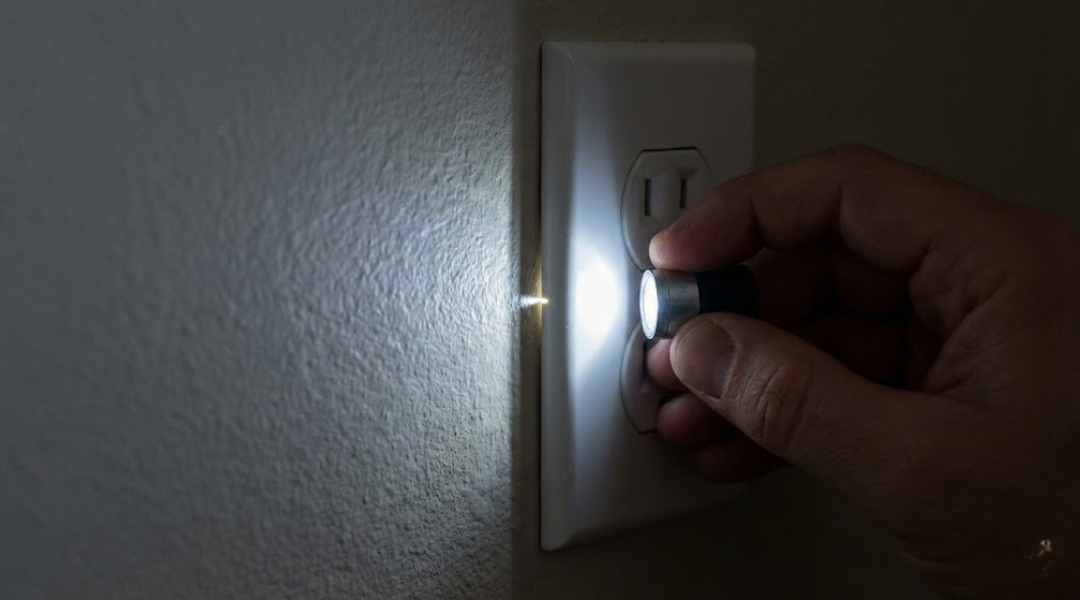
Run your hand along the wall to feel for air movement. If air can pass through, so can sound. Pay attention to any cracks in the drywall or areas where the paint looks uneven.
Turn off your lights at night and look for light coming from your neighbor’s side. Light leaks show you exactly where sound leaks exist. HVAC vents and recessed lighting fixtures are common problem spots that people often miss.
Determining the Main Sources of Disruption
You need to figure out what types of noise bother you most. Airborne noise includes talking, TV shows, and music that travels through the air. Impact noise comes from footsteps, doors closing, or furniture moving against walls or floors.
Track when you hear the most noise. Write down the time of day and what kind of sound it is. This helps you understand if the problem is voices during the day or TV bass at night.
Test the noise by having someone tap on different parts of the shared wall from your side while you listen from different spots in your room. This shows you which sections of the wall transmit sound most easily. The areas that sound loudest need the most attention.
Listen for low-frequency sounds like bass from music or home theater systems. These are harder to block than high-frequency sounds like voices.
Effective Soundproofing Methods That Work
Real soundproofing requires a combination of strategies that address how sound travels through walls. The most effective approach involves adding weight to block sound waves, physically separating wall layers to stop vibrations, and filling empty spaces with materials that absorb sound energy.
Adding Mass With Drywall and Mass Loaded Vinyl
Sound waves lose energy when they have to push through heavy materials. Adding an extra layer of 5/8-inch drywall to your existing wall increases its density and makes it harder for noise to pass through.
Mass Loaded Vinyl (MLV) is a dense, flexible material that weighs about one pound per square foot. You can install it directly against studs during construction or attach it to an existing wall surface. MLV works particularly well because it’s thin but extremely dense, adding significant sound-blocking power without taking up much space.
For the best results, combine both methods. When you attach a second layer of drywall over MLV, you create a barrier that can improve your wall’s sound rating by 5 to 10 points. This combination blocks both low-frequency sounds like bass and higher-frequency noises like conversation.
The key is proper installation. Seal all seams with acoustic caulk and make sure there are no gaps around outlets, baseboards, or ceiling joints where sound can leak through.
Decoupling Using Resilient Channels and Staggered Studs
Decoupling breaks the direct connection between wall surfaces so vibrations can’t travel from one side to the other. Resilient sound isolation clips (RSIC-1) attach to your studs and hold metal hat channels, which then support the drywall. This creates a floating wall system that can improve sound ratings by 15 to 20 points.
Staggered stud construction is another decoupling method. You build the wall with alternating studs on a wider base plate, so drywall on one side doesn’t touch the same studs as drywall on the other side. This method works best during new construction or major renovations.
Double-stud walls take this further by building two separate stud walls with a gap between them. While this uses more space, it creates excellent sound isolation because there’s no structural connection between the two sides.
You can pair decoupling with damping compounds like Green Glue between drywall layers. This combination addresses both vibration transfer and sound wave energy.
Filling Cavities With Acoustic Insulation
Empty wall cavities let sound waves bounce around and pass through easily. Standard fiberglass insulation (R13 or R19) fills this space and reduces airborne noise transmission. The insulation slows down sound waves and prevents the hollow cavity from acting like a drum.
Mineral wool insulation performs better than fiberglass for sound control because it’s denser. Roxul and similar products are specifically designed for acoustic applications and provide better sound absorption across different frequencies.
Don’t expect insulation alone to solve noise problems. It typically improves sound ratings by only 3 to 5 points when used by itself. Insulation works best as part of a complete system that includes added mass and decoupling.
Fill the cavity completely without compressing the material. Compressed insulation loses its effectiveness because air gaps are what trap sound energy.
Supplemental Techniques for Noise Reduction
Beyond structural soundproofing methods, several supplemental techniques can reduce noise from shared walls without major construction. These approaches work best when combined with other soundproofing strategies, targeting specific sound frequencies and filling gaps in your noise reduction plan.
Installing Acoustic Panels and Absorbers
Acoustic panels reduce echo and reverberation in your room, making existing noise less noticeable. These panels work by absorbing sound waves before they bounce around your space and amplify.
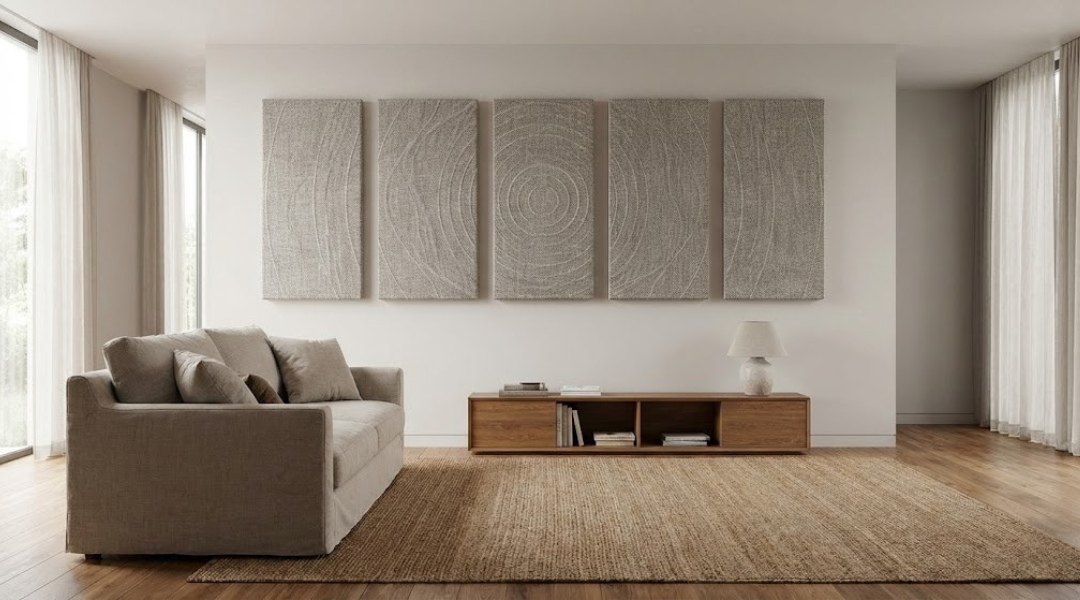
You should cover 15-20% of your shared wall surface for effective results. Focus on areas directly opposite where neighbor noise enters your room. Fabric-wrapped panels offer the best performance for mid to high-frequency sounds like voices and television audio.
Installation tips:
- Mount panels 1-2 inches away from the wall for better sound absorption
- Space panels evenly across the wall rather than clustering them
- Use acoustic adhesive or Z-clips for secure mounting
Foam panels cost $1-3 per square foot, while professional fabric-wrapped panels run $3-8 per square foot. Bass traps placed in room corners handle low-frequency sounds that regular panels miss. Acoustic panels reduce perceived noise by 20-30% but won’t completely block sound transmission through walls.
Using Soundproof Curtains and Blankets
Heavy curtains and blankets add mass to your walls and absorb airborne sound. Soundproof curtains contain multiple dense fabric layers, often with a middle layer of mass-loaded vinyl or thermal backing.
Install curtain rods 4-6 inches away from your shared wall to create an air gap. This space improves sound absorption by preventing direct contact between the curtain and wall. Your curtains should extend from floor to ceiling and overlap by several inches in the middle when closed.
Moving blankets offer a budget alternative at $20-30 each compared to $50-100 for acoustic curtains. You can hang multiple blankets using heavy-duty hooks or a curtain rod system. Layer two or three blankets for better noise reduction.
Material comparison:
| Material | Cost per panel | Noise reduction | Best for |
|---|---|---|---|
| Acoustic curtains | $50-100 | 20-30% | Voices, TV |
| Moving blankets | $20-30 | 15-25% | General noise |
| Quilts | $30-80 | 10-20% | Light noise |
This method works best for high and mid-frequency sounds. You can remove and adjust these solutions easily, making them ideal for rental properties.
Sealing Gaps With Acoustic Caulk
Small gaps around outlets, baseboards, and where walls meet ceilings create pathways for sound to travel. Even tiny cracks compromise your soundproofing efforts significantly.
Acoustic caulk stays flexible permanently, unlike regular caulk that hardens and cracks over time. This flexibility maintains an airtight seal as your home settles and shifts. Apply it anywhere two surfaces meet along your shared wall.
Priority sealing locations:
- Electrical outlets and switch plates
- Baseboards where they meet the wall
- Crown molding and ceiling joints
- Window and door frames
- HVAC vents and ductwork
Remove outlet covers and apply acoustic caulk around the electrical box edges before reinstalling. Install foam gaskets behind outlet covers for additional sound blocking. One tube of acoustic caulk costs $8-15 and covers about 30 linear feet.
Use a caulk gun for clean application and smooth the bead with a wet finger or caulk tool. Let it cure for 24 hours before painting. This simple step can reduce noise transmission by 10-15% by eliminating sound leaks.
Strategic Placement of Bookshelves and Furniture
Heavy furniture against shared walls adds mass that blocks and absorbs sound vibrations. A fully-stocked bookshelf creates an effective sound barrier without permanent modifications.
Choose solid wood bookcases over hollow particleboard units. Fill shelves completely with books, as the varied densities and irregular shapes diffuse sound waves. Position multiple bookcases to cover as much of the shared wall as possible.
Effective furniture placement:
- Place dressers, wardrobes, or armoires against shared walls
- Position your bed headboard on an interior wall instead of the shared wall
- Use upholstered furniture near shared walls for additional sound absorption
- Leave a 1-2 inch gap between furniture and walls to create an air pocket
Large, heavy furniture pieces work better than multiple small items. A full bookcase can reduce noise by 20-25%. Combine this with other methods like curtains or panels for better results. This approach requires no installation and you can rearrange furniture anytime your needs change.
Options That Are Less Effective
Some soundproofing methods receive widespread attention but deliver disappointing results for shared walls. These solutions often promise significant noise reduction at low cost but typically reduce sound by only 10-40% depending on the materials and noise type.
Limitations of Foam Panels on Their Own
Foam panels excel at absorbing echoes within a room but do little to block noise from passing through shared walls. These lightweight materials primarily address high-frequency sounds and reverberation rather than preventing sound transmission between spaces.
The panels work by absorbing sound waves that hit them but lack the mass needed to stop noise from traveling through wall structures. You might notice improved sound quality inside your room as echoes decrease. However, your neighbor’s TV or conversations will still pass through the wall largely unchanged.
Foam panels typically weigh only a few ounces per square foot. Blocking sound transmission requires dense, heavy materials that measure at least 1-2 pounds per square foot. Installing foam directly on a shared wall addresses the wrong acoustic problem entirely.
The Reality of Soundproof Paint and Wallpaper
Soundproof paint and wallpaper add minimal mass to your walls despite marketing claims. These products might reduce noise by 2-4 decibels at most, which is barely noticeable to human ears. A 10-decibel reduction represents roughly half the perceived loudness.
The thin application layer of these products cannot provide the density needed to block sound effectively. Standard soundproof paint adds less than 0.1 pounds per square foot of mass to your wall. Acoustic wallpaper performs similarly, offering mostly aesthetic appeal rather than functional noise reduction.
You would need to apply dozens of coats to achieve results comparable to a single layer of mass-loaded vinyl. These products cost $80-150 per gallon or roll but deliver results you likely won’t notice.
DIY Solutions With Minimal Structural Impact
Simple additions like curtains, rugs, or furniture placement against shared walls provide only marginal noise reduction. These methods might decrease sound by 5-15 decibels in ideal conditions but often fall short of expectations for blocking neighbor noise.
Heavy curtains work better on windows than walls because they create an air gap and add mass to a thin surface. A solid wall already provides structural mass that curtains cannot significantly improve. Moving blankets hung on walls absorb some sound but lack the density to stop transmission.
Budget methods under $100 rarely address the core issue with shared walls: the need for added mass, decoupling, or both. You might notice slight improvements with multiple lightweight solutions combined. However, these approaches cannot match the performance of proper soundproofing materials like mass-loaded vinyl or resilient channels that actually modify wall structure and density.
Planning Your Soundproofing Project
A successful soundproofing project depends on choosing the right materials for your budget and deciding whether to tackle the work yourself or hire professionals. Both choices significantly affect your results and total investment.
Budgeting and Material Selection
Soundproofing costs range from $2 to $5 per square foot for effective solutions. Your budget determines which combination of materials you can afford.
Low-cost options like basic insulation only provide minimal improvement at around $1 per square foot. Mid-range solutions using Green Glue damping compound with an extra layer of 5/8″ drywall cost $3 to $5 per square foot and deliver noticeable results.
High-performance materials add more to your budget but solve serious noise problems. Mass Loaded Vinyl (MLV) adds density to block sound waves. RSIC-1 clips with hat channel separate your drywall from wall studs to stop vibration transfer. These can improve your wall’s STC rating by 15 to 20 points.
Calculate your wall’s square footage before shopping. A 10-foot by 8-foot wall equals 80 square feet, so a mid-range solution would cost $240 to $400 in materials. Add 10% extra for waste and mistakes.
DIY Versus Professional Installation
Installing a second drywall layer with Green Glue is manageable for DIY work if you have basic construction skills. You need to cut drywall accurately, apply the compound evenly, and secure sheets properly through both layers into studs.
RSIC-1 clips and hat channel require precise installation. Incorrect spacing or attachment compromises the decoupling effect. Most homeowners benefit from hiring professionals for this step.
Professional installation costs $40 to $75 per hour for labor. A shared wall project typically takes one to two days. Contractors have the tools and experience to avoid common mistakes like gaps in coverage or improper fastener use that creates sound bridges.
Consider hiring professionals if your wall needs electrical outlet relocation or if local building codes require permits and inspections.