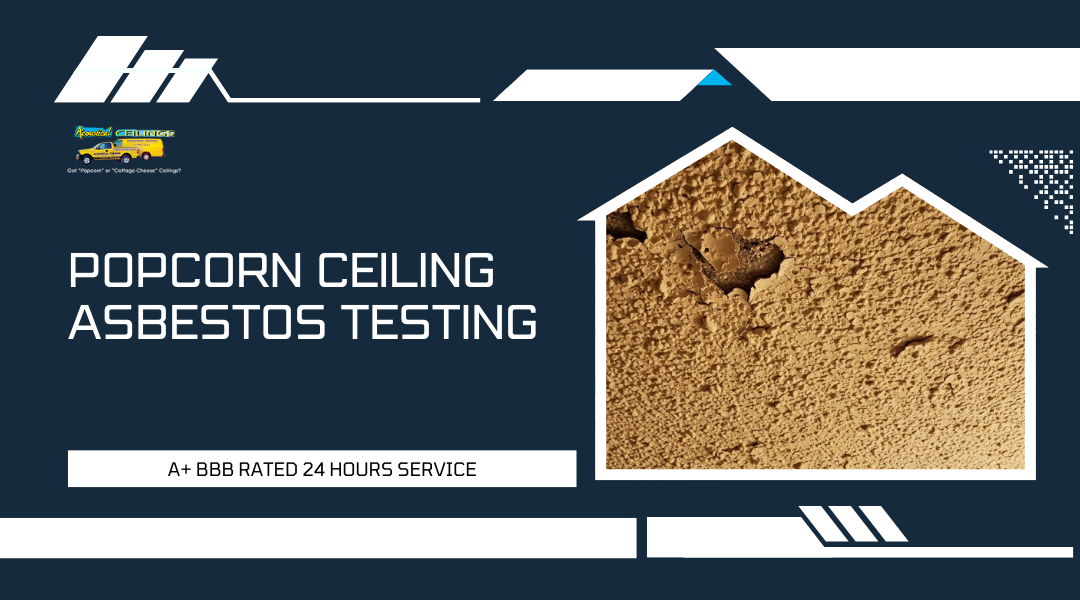
Popcorn ceilings were once a popular design choice in Rancho Cucamonga homes, known for their textured look and sound-dampening benefits. Today, those same ceilings can raise important safety questions, especially in older properties. If your home was built or renovated before the mid-1980s, there’s a real possibility that the popcorn ceiling material contains asbestos. Because asbestos fibers can’t be identified by sight alone, understanding when your ceiling was installed is an important first step in determining its risk.
Knowing what may be in your textured ceiling helps you make informed decisions about maintenance, renovation, or removal. In Rancho Cucamonga, where many homes date back several decades, factors like the age of the building, any past remodeling, and the condition of the ceiling itself all play a role. Subtle signs, such as crumbling material or loose areas in a stipple or acoustic ceiling, can signal the need for professional inspection.
Before taking action, it’s important to recognize what you can and cannot conclude without testing. Certified asbestos testing remains the only reliable way to confirm whether your popcorn ceiling contains asbestos. Understanding these details will guide your next steps and help protect your home and health.
Situations Where Popcorn Ceiling Composition Becomes Relevant In Rancho Cucamonga Homes
You may not think about what’s in your ceiling until you plan a renovation, repainting, or repair project. When you scrape, sand, or drill into a textured ceiling, the material can release dust. If the texture contains asbestos, disturbing it becomes a health concern, not just a design issue.
Before remodeling or painting, the age of your Rancho Cucamonga home is an important clue. Homes built before the 1990s sometimes used asbestos-containing materials. If your home falls into that range, have the ceiling tested by a certified professional before starting any work.
During repairs or water damage cleanup, you should consider the ceiling’s composition. Water, cracks, or impact damage can loosen old texture and release fibers. In those cases, testing and professional guidance are safer than scraping or patching it yourself.
While not all popcorn ceilings contain asbestos, many older ones do. The table below shows when checking the composition usually matters most:
| Situation | Why It Matters | Suggested Action |
|---|---|---|
| Home built before 1990 | Higher chance of asbestos use | Get laboratory testing |
| Planned renovation | Disturbance may release dust | Hire licensed inspector |
| Ceiling damage | Fibers can become airborne | Avoid contact, call professional |
| Property sale or inspection | Disclosure and safety codes | Include material testing |
Knowing your ceiling’s composition helps you make safe, informed choices about removal or repair work in your home.
Timeframe, Building Practices, And Material Use In Local Residential Construction
Homes in Rancho Cucamonga vary in age, but many were built between the 1960s and 1990s, when textured ceilings were popular. During those decades, builders often used spray-on ceiling materials that sometimes contained asbestos for fire resistance and sound control. After federal limits were introduced in the late 1970s, the use of asbestos-based products gradually declined, though older homes may still include them.
Typical residential construction follows a clear timeline. It begins with site preparation and permitting, then moves through foundation, framing, and finishing. Most homes take anywhere from 6 to 12 months to complete, depending on size, design, and inspection requirements. Local building codes require energy-efficient insulation and safety standards that have changed over time.
| Construction Phase | Common Materials (1960–1990) | Common Materials (After 1990) |
|---|---|---|
| Ceiling Finishes | Asbestos-containing sprays, joint compounds | Non-asbestos texture sprays, drywall joint compounds |
| Insulation | Vermiculite, fiberglass | Fiberglass, cellulose, foam |
| Wallboard | Gypsum board | Gypsum board with paper tape |
You can usually estimate the likelihood of asbestos by identifying the home’s construction date and known material suppliers. Builders before 1980 were more likely to include asbestos-containing materials in textured ceilings and joint compounds. If your home was remodeled later, newer layers may cover or seal the original material, which makes testing by a certified asbestos professional the safest next step.
What Determines Whether Asbestos Is Present In Popcorn Ceiling Materials
Several factors influence whether a popcorn ceiling contains asbestos. These include when the materials were made, where they were sourced, and how they were handled during production. Testing is the only reliable way to confirm the presence of asbestos fibers in ceiling texture coatings.
Regulatory Cutoffs, Material Sourcing, And Manufacturing Changes
Asbestos use in ceiling materials declined after federal regulations began restricting asbestos-containing products in the late 1970s. However, because old supply stock was still used for years, homes built into the late 1980s—and sometimes later—may still have asbestos popcorn ceilings.
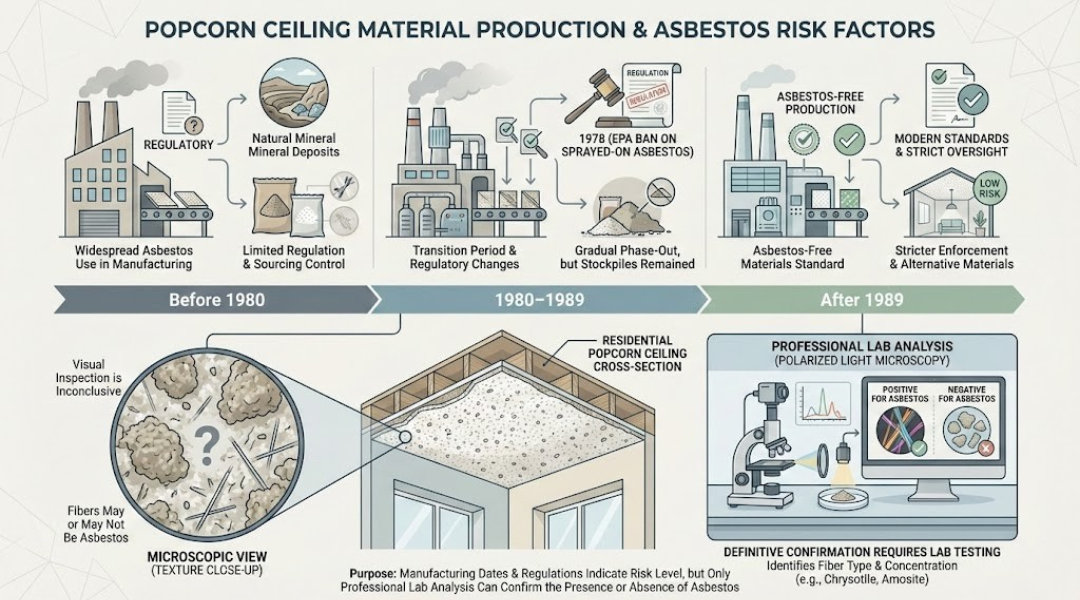
Regulations varied by product type and region. For example, ceiling textures made before 1980 are more likely to contain asbestos. Manufacturers changed ingredients gradually rather than all at once, so production dates offer only a general guide. Some builders also sourced imported materials that continued containing asbestos after domestic bans.
Here’s a simple reference:
| Home Build Date | Likely Risk of Asbestos |
|---|---|
| Before 1980 | High |
| 1980–1989 | Moderate |
| After 1989 | Low |
These differences in sourcing and manufacturing make professional sampling and laboratory analysis, such as polarized light microscopy (PLM), crucial for certainty.
Why Visual Inspection And Age Alone Are Insufficient Indicators
You can’t confirm asbestos in a popcorn ceiling just by looking at it. Texture, color, or age might hint at asbestos, but these clues aren’t proof. Popcorn ceiling asbestos fibers are microscopic, and visual signs of asbestos in a popcorn ceiling are not reliable indicators.
Some asbestos-free products were made to look identical to asbestos-containing materials. Older or yellowed ceilings might simply show age, not asbestos. Because even minor disturbance can release asbestos fibers, scraping a small sample yourself poses health risks.
Professional asbestos testing remains the only accurate method. A certified inspector collects tiny samples under controlled conditions and sends them for PLM analysis. The lab report identifies whether asbestos is present and what percentage it makes up, guiding your next steps safely and accurately.
Interpreting Risk Without Testing: What Can And Cannot Be Concluded
You can make reasonable observations about possible asbestos risk based on your ceiling’s age, condition, and whether it has ever been disturbed. However, without laboratory testing, you cannot confirm the presence or absence of asbestos fibers in your home.
Disturbance, Condition, And Exposure Pathways
If your Rancho Cucamonga home was built before 2004, there’s a chance the popcorn ceiling contains asbestos. Age alone does not prove risk, but it does increase the likelihood of asbestos use.
You should focus on how the ceiling looks and whether it has been disturbed. Cracks, water stains, or damage may allow asbestos fibers to become airborne. Undisturbed ceilings that remain intact generally pose less immediate danger because asbestos material is sealed within the coating.
Airborne asbestos fibers are the most serious hazard. Once released and inhaled, they can lodge in lung tissue and lead to asbestosis, mesothelioma, and other asbestos-related diseases decades later. It’s safest to avoid scraping, sanding, or drilling into the surface. If you suspect exposure, speak with a healthcare provider and consider requesting a free asbestos case review through qualified legal or environmental resources.
Tradeoffs Between Assumption, Sampling, And Inaction
You have three main options if testing is uncertain or costly: assume asbestos is present, collect controlled samples, or do nothing and limit contact. Each choice carries tradeoffs.
| Approach | Benefit | Risk |
|---|---|---|
| Assume presence | Avoid exposure by treating material as hazardous | May lead to unnecessary removal costs |
| Professional sampling | Confirms presence or absence accurately | Slight disturbance risk during collection |
| Inaction | No disturbance, no testing cost | Ongoing uncertainty, possible hidden exposure |
Testing remains the only reliable method for confirmation. Yet when you cannot test, informed caution helps reduce harm. Keep the ceiling sealed and undisturbed, and use licensed asbestos abatement experts before altering any suspect material.
How Identification Methods Shape Outcomes And Decisions
Accurate asbestos identification affects how you plan, budget, and execute any work involving a popcorn ceiling. The tools and methods you use determine not only the reliability of test results but also the safety, legal compliance, and total cost of your next steps.
Laboratory Testing Versus Field Assumptions
Laboratory testing gives you measurable proof of whether your ceiling contains asbestos. To start, you or a certified asbestos inspector safely collect a small material sample and send it to a lab for analysis using polarized light microscopy (PLM) or transmission electron microscopy (TEM). These methods identify asbestos fibers with clarity that basic observation cannot match.
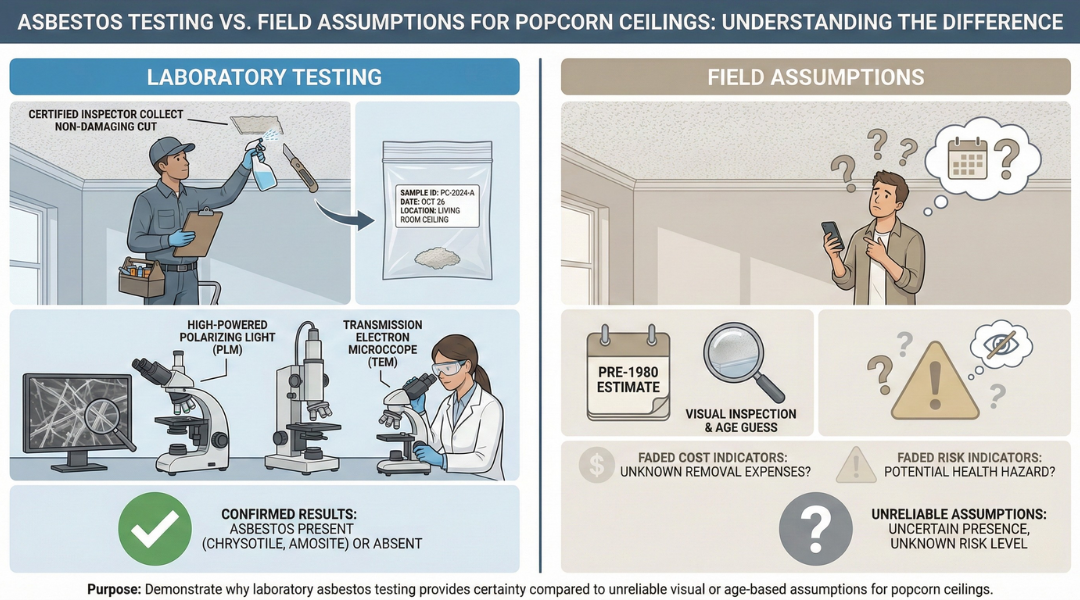
Field assumptions, on the other hand, rely on educated guesses. Some property owners try to assess age, appearance, or texture to decide if a ceiling might hold asbestos, especially when it was installed before 1980. While this approach avoids immediate sampling, it often leads to uncertainty and unnecessary costs if you later discover the ceiling was harmless—or worse, if asbestos was disturbed during work.
Comparing both methods shows why professional asbestos testing is safer. Testing costs more upfront, but it supports correct decisions about asbestos abatement and popcorn ceiling removal. It also ensures you comply with state and federal safety rules before hiring a licensed abatement contractor for asbestos removal.
Implications For Remodeling, Maintenance, And Property Transactions
The way you identify asbestos directly impacts remodeling and property decisions. If a lab confirms fibers in your popcorn ceiling, you’ll need either certified asbestos abatement or full asbestos popcorn ceiling removal before sanding, scraping, or painting. Attempting removal without testing risks contamination of your home and air system.
For maintenance, having lab results on file helps contractors plan safe updates. They can use proper containment methods or schedule professional abatement early, reducing delays once renovation begins. In property transactions, verified asbestos test reports often ease buyer concerns and clarify responsibilities during negotiations.
Using a certified asbestos professional or licensed abatement contractor limits liability and supports regulatory compliance. Knowing exactly what materials contain asbestos lets you budget realistically, choose the right removal timeline, and avoid health or legal issues later.