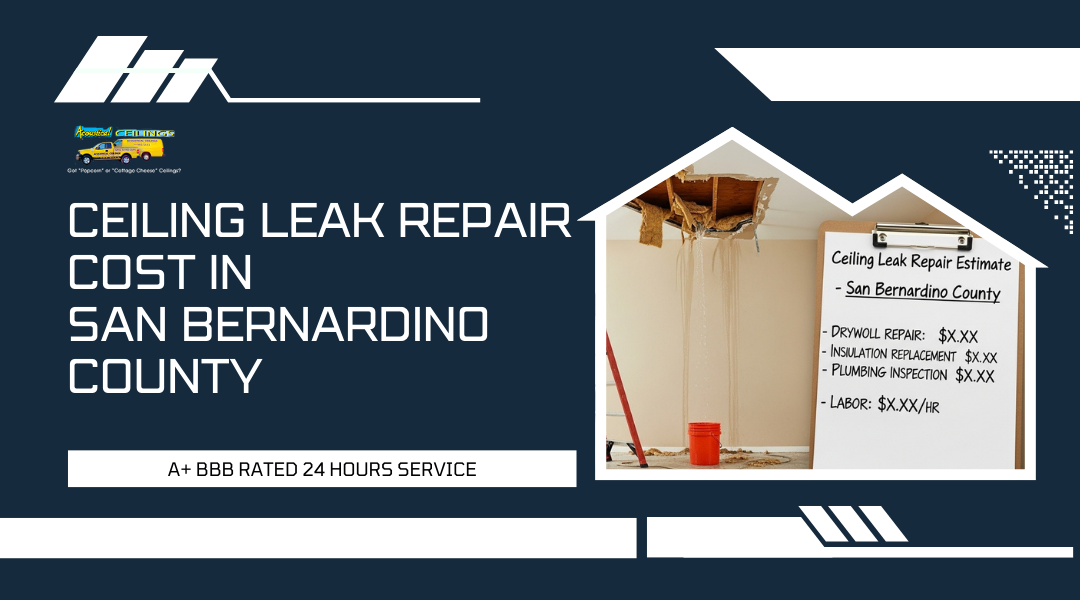
A ceiling leak can signal problems ranging from a simple water stain to serious structural damage that threatens your entire home. In San Bernardino County, homeowners face unique challenges with repair costs due to local climate conditions, building codes, and material availability. Ceiling leak repair costs in San Bernardino County typically range from $150 for small patch jobs to over $15,000 for complete rebuilds, depending on the leak source, damage extent, and structural impact.
Understanding what drives these costs helps you make smart decisions when water damage appears overhead. You need clear information about pricing factors specific to your area, from labor rates to permit requirements. The difference between a quick fix and a full rebuild depends on how early you catch the problem and the underlying cause.
This guide breaks down real costs for ceiling leak repairs across San Bernardino County. You’ll learn how contractors evaluate damage, what factors increase your final bill, and how to balance immediate fixes against long-term solutions. Whether you’re dealing with a minor stain or facing extensive water damage, you’ll understand what to expect when you call a professional.
What You’ll Understand By The End
This guide breaks down the specific dollar amounts you can expect for ceiling leak repairs in San Bernardino County and shows you how local conditions—from desert heat to building codes—directly affect what contractors charge and which repairs matter most.
What Defines Ceiling Leak Repair Cost Ranges
Ceiling leak repair cost spans from $300 for a small patch job to $4,000 when you need structural fixes and full drywall replacement. Your cost to repair ceiling damage starts with three factors: the leak source, how much area got wet, and your ceiling material.
A basic repair covering 2–4 square feet runs $350–$600. You’ll pay for patching materials, texture matching, and 4 hours of labor. Mid-range projects between $900 and $1,800 involve 6–10 square feet of ceiling repair cost work, often requiring drywall replacement and repainting.
Plaster ceiling repair cost jumps higher than drywall because fewer contractors work with plaster and materials cost more. Premium repairs reach $2,200–$4,000 when your sagging ceiling repair cost includes insulation replacement, mold remediation, or fixing the roof or plumbing that caused the leak. Major leaks need water damage restoration at $150–$2,000, depending on drying time and mold checks.
How Local Building Conditions Shape Pricing And Approach
San Bernardino County’s extreme temperature swings—from 100°F summers to occasional freezing nights—stress roofing materials and create more frequent seal failures around vents and skylights. These conditions mean you’ll often need both ceiling and roof work bundled together.
Desert dust accumulation clogs HVAC condensate lines more frequently here than in coastal regions, adding $200–$500 in plumbing fixes to your ceiling repair. Local contractors charge labor rates 5–15% lower than Los Angeles County but may add travel fees if you’re in rural areas like Twentynine Palms or Needles.
County building codes require permits for structural ceiling work or electrical modifications, adding $50–$250 to your project. Wind-rated roofing standards in high-desert zones can increase your roof repair portion by 10–20%. Most San Bernardino contractors quote popcorn ceiling removal cost at $1–$3 per square foot if you want to upgrade outdated texture during repairs.
The Cost Spectrum From Stains To Full Rebuilds
Ceiling leak repair costs in San Bernardino County range from $150 for simple stain patches to $4,000 or more for complete structural rebuilds. The price depends on whether you need cosmetic fixes, drywall replacement, or full structural work including insulation and framing.
Typical Repair Scenarios And Material Involvement
A small ceiling repair for minor water stains typically costs $150 to $600. You’ll pay for patching compound, primer, and paint to match your existing texture. Basic drywall repair uses joint tape and spackle to fill ceiling crack repair needs.
Mid-range ceiling leak repairs run $900 to $1,800 when you need drywall replacement across 6 to 10 square feet. Your contractor will cut out water damaged ceiling sections and install new sheetrock. Material costs include the drywall sheets, screws, joint compound, and texture spray for popcorn ceiling repair if needed.
Plaster ceiling repair often costs more than standard drywall work because the material requires special mixing and multi-coat application. You might spend $60 to $140 on materials alone, plus $400 to $900 in labor for proper plaster matching and curing time.
| Repair Type | Material Cost | Labor Cost | Total Range |
|---|---|---|---|
| Stain patch | $20–$60 | $100–$300 | $150–$600 |
| Drywall section | $60–$140 | $400–$900 | $520–$1,270 |
| Plaster work | $80–$200 | $500–$1,200 | $650–$1,500 |
When Aesthetics Overlap With Structural Restoration
You face higher costs when water damage extends beyond the surface. A sagging ceiling signals structural problems that demand immediate attention. Sagging ceiling repair often requires removing wet insulation, replacing ceiling joists, and installing new drywall.
Water exposure weakens ceiling framing and creates mold growth behind the surface. Your restoration might include drying equipment rental at $30 to $120, mold remediation at $500 to $2,000, and insulation replacement at $200 to $800. These add-ons transform a simple patch into a full restoration project.
Matching existing ceiling texture becomes critical for visible areas. Popcorn ceiling removal before repair adds $1 to $3 per square foot if you want a smooth modern finish instead of matching the old texture. Your contractor must feather edges and blend new sections into surrounding areas for invisible repairs.
How Project Scope Expands From Touch-Ups To Reconstruction
Touch-up work covers 2 to 4 square feet and takes 4 hours. You’re looking at $350 to $600 for these basic ceiling leak repairs. The contractor patches the hole, applies texture, and paints to match.
Moderate projects covering 6 to 10 square feet require 6 to 12 hours and cost $900 to $1,800. Your contractor removes damaged drywall, checks framing, installs new sheetrock, and completes finishing work. This level includes fixing the water source through minor roof or plumbing repairs.
Full reconstruction tackles sagging ceiling issues across entire rooms. These projects cost $2,200 to $4,000 and take 14 to 20 hours. You’re paying for structural repairs, complete drywall replacement, insulation installation, and full room repainting. Major ceiling damage from prolonged leaks often requires permits and inspection fees ranging from $50 to $100 in San Bernardino County.
Factors Unique To San Bernardino County’s Building Landscape
San Bernardino County’s vast geography creates distinct challenges for ceiling repairs that directly affect your costs. The region spans desert climates, mountain areas, and urban zones, each with different moisture patterns, building requirements, and labor markets.
Regional Climate Influences On Moisture And Ceiling Longevity
San Bernardino County covers over 20,000 square miles with dramatic climate variations. The high desert areas experience extreme temperature swings between day and night, causing roofing materials to expand and contract repeatedly. This movement creates gaps where water can enter during rare but intense storms.
Mountain communities like Big Bear and Lake Arrowhead face heavy snowfall and ice dams. These conditions force water under shingles and into your ceiling structure. Snow melt cycles in spring create persistent moisture problems that accelerate ceiling damage.
The valley areas deal with scorching summers that reach 110°F or higher. This heat degrades roofing materials faster than in coastal regions. Your roof ages quicker in these conditions, making it more vulnerable to leaks. When monsoon rains arrive in late summer, aged roofs often fail suddenly.
Flash flooding during desert storms overwhelms drainage systems rapidly. Water pools on flat roofs common in commercial buildings and older homes. This standing water finds weak points and seeps through to damage ceilings below.
Local Building Codes And Contractor Pricing Norms
San Bernardino County enforces the 2022 California Building Code through its Building and Safety department. All ceiling repairs connected to roof damage require permits and inspections. You’ll pay permit fees that add to your total repair cost.
The county’s landscaping standards under Chapter 83.10 affect properties where contractors need access. You might need to protect or restore landscaping around work areas, adding unexpected costs.
Contractor pricing varies significantly between incorporated cities and unincorporated county areas. Urban contractors in San Bernardino city typically charge 15-25% more than those serving rural desert communities. This reflects higher business operating costs and insurance requirements in populated zones.
Building and Safety conducts plan reviews and multiple inspections during repairs. These requirements extend project timelines by 1-2 weeks compared to areas with simpler processes. Your contractor’s pricing reflects these built-in delays.
Material Availability And Labor Rate Variations Across The County
The county’s massive size creates supply chain challenges. Materials ship easily to western valley areas near distribution hubs. Remote locations in the eastern desert or mountain regions face delivery surcharges of $200-500 per order.
Specialized materials for unique climates cost more here. Mountain areas require ice and water shield underlayment that desert homes don’t need. Desert repairs need UV-resistant materials rated for extreme heat.
Labor rates shift dramatically across the county’s geography:
| Area | Average Hourly Rate |
|---|---|
| San Bernardino/Fontana | $75-95 |
| High Desert (Victorville) | $65-80 |
| Mountain Communities | $85-110 |
| Remote Desert Areas | $70-90 + travel fees |
Mountain contractors charge premium rates because fewer companies serve these areas year-round. Winter weather limits when repairs can happen, creating higher demand during short construction windows. You’ll also pay travel time when contractors drive from valley locations to remote sites.
Interpreting Real Costs Through A Contractor’s Perspective
Contractors price ceiling leak jobs based on how they diagnose the source, what materials they encounter, and the time required to restore your ceiling properly. The leak origin dictates the trade involved, while ceiling type determines repair technique and labor hours.
Why Leak Source Diagnosis Affects Repair Efficiency
A plumbing leak requires a licensed plumber to locate and fix the pipe before any ceiling work begins. Your contractor must wait for the plumber to finish, adding coordination time to the schedule.
A roof leak needs a roofing specialist to seal the entry point. This often means attic access, flashing repair, or shingle replacement, which extends project duration and cost.
An HVAC leak from condensation pans or clogged drains demands an HVAC technician. These leaks are usually easier to fix than plumbing or roof issues, but you still pay for two separate trades.
Contractors know that misdiagnosing the source wastes time and money. If they patch your ceiling before fixing a roof leak, the damage will return. Smart ceiling repair contractors always confirm the source is repaired before beginning restoration.
How Ceiling Composition (Drywall, Acoustic Tile, Texture) Changes Method And Labor
Standard drywall repairs involve cutting out damaged sections, installing new panels, taping seams, and matching texture. This process takes four to eight hours for a small area.
Acoustic tile ceilings require tile replacement rather than patching. If your tiles are discontinued, contractors may need to replace an entire section to maintain a uniform appearance, which increases material costs.
Textured ceilings like popcorn or knockdown add complexity. Matching the original texture demands skill and multiple coats. Some textures contain asbestos, requiring professional testing and abatement before any water damage repair begins.
Plaster ceilings take longer to repair than drywall because plaster requires curing time between coats. Contractors charge more per hour for plaster work due to the specialized skill required.
Lessons From Acoustical Ceilings’ Hands-On Regional Experience
Local contractors familiar with San Bernardino County understand the area’s common ceiling types and typical leak sources. They know which homes have older plumbing systems prone to failure and which roofing materials last in the desert climate.
Experienced teams complete water damage repair faster because they anticipate hidden damage behind visible stains. They check insulation, framing, and electrical fixtures during the first visit.
Contractors who handle frequent roof replacement projects in the region know how thermal expansion affects roofing materials. They spot early signs of failure that homeowners miss, preventing future leaks.
Regional experience also means established relationships with suppliers. Your contractor can source matching materials faster, reducing project delays and keeping labor costs predictable.
Evaluating Tradeoffs And Long-Term Implications
Choosing between a quick patch and full replacement affects not only upfront costs but also future repair bills and property integrity. Smart decisions about reinforcement and ongoing maintenance protect your investment while reducing the chance of repeat damage.
Cost-Benefit Reasoning Between Patching And Replacement
Patching a small stain costs $150 to $450, while drywall replacement runs $250 to $2,000 depending on area size. A patch makes sense when water damage is under 4 square feet and no mold or structural issues exist.
Replacement becomes necessary when you find sagging, persistent moisture, or damage beyond 6 square feet. Using a moisture meter helps confirm whether hidden dampness remains behind the surface. Skipping replacement when needed leads to mold remediation bills of $500 to $2,000 later.
DIY ceiling repair can cut labor costs by $100 to $600, but mistakes risk incomplete drying or missed mold growth. Professional work includes moisture checks and texture matching that protect long-term value. If your home was built before 1980, hire a licensed contractor to test for asbestos removal needs before cutting into ceiling material.
The Role Of Preventative Reinforcement After Major Repairs
After fixing a major leak, adding reinforcement steps prevents repeat incidents. Insulation replacement costs $150 to $800 but stops future condensation and temperature swings that cause new leaks.
Sealing roof penetrations or upgrading pipe connections adds $200 to $600 upfront yet reduces the chance of another ceiling failure by 40 to 60 percent. Many San Bernardino County homeowners skip this step and face the same repair within two years.
Request a post-repair inspection to verify all moisture sources are eliminated. This inspection typically costs $100 to $250 and catches problems before they escalate. Documenting these preventative measures also helps with insurance claims if another unrelated leak occurs.
How Consistent Maintenance Influences Future Financial Exposure
Annual roof inspections cost $100 to $200 but identify minor issues before they cause ceiling damage. Clearing gutters and checking plumbing connections twice yearly reduces leak risk by up to 70 percent.
Regular maintenance spreads costs into predictable $200 to $400 yearly expenses instead of surprise $1,500 to $4,000 emergency repairs. You avoid the compounding effects of hidden water damage, which can double repair costs when left undetected for six months or longer.
Keep records of all inspections and repairs. This documentation supports property value during resale and simplifies insurance claims. In San Bernardino County’s dry climate, even small leaks degrade quickly once they start, making consistent checks more valuable than in wetter regions.