Achieving a smooth ceiling finish can transform your space, making it feel more modern and inviting. Whether you’re looking to update a textured ceiling or create a sleek look with acoustical materials, straightforward steps can help you achieve the perfect finish. In Rancho Cucamonga, California, skilled drywall contractors are available to guide you through the process smoothly.
The type of finish you choose can significantly affect the room’s ambiance. You can select from methods that include skim coating, using ceiling wallpaper, or opting for a fresh coat of paint. By exploring various styles and finishes, you can find the right solution that meets your aesthetic preferences and functional needs.
Investing time in achieving a flawless ceiling is worth it. You not only enhance the visual appeal of your rooms, but you also increase the value of your home. The right choices will give your ceilings a polished look that complements your overall design.
Why Choose a Smooth Ceiling Finish?
A smooth ceiling finish can greatly enhance the look and feel of your space. It offers a modern aesthetic, makes maintenance easier, and boosts light reflection, all of which contribute to a more inviting environment.
Modern Aesthetic Appeal
Choosing a smooth ceiling finish elevates your room’s design. It creates a sleek, contemporary look that complements various interior design styles. A smooth surface integrates seamlessly with other elements of your space, from walls to light fixtures.
The “fifth wall” concept emphasizes how the ceiling impacts a room’s overall feel. A well-finished ceiling draws attention upward, making the room feel more open and spacious. This modern appeal makes it a favorite for homeowners and designers alike.
Easier Maintenance and Cleaning
Smooth ceilings are much easier to maintain than textured finishes. Dust and grime are less likely to cling to a flat surface, allowing for simpler cleaning routines. You can simply wipe down the ceiling with a damp cloth to keep it looking fresh.
Additionally, without the nooks and crannies of textured ceilings, there’s less chance for cobwebs or stains to settle in. This means less time spent cleaning and more time enjoying your beautiful space. For busy households, this is a significant benefit.
Enhancing Light Reflection and Room Brightness
A smooth ceiling finish enhances light reflection, making your rooms feel brighter and more open. Light bounces off a flat surface more efficiently than from a textured one. This quality can significantly reduce your need for additional lighting.
With better light reflection, you create a welcoming atmosphere. It can help reduce energy costs because you may not need to rely as much on artificial light. A well-lit space positively impacts mood and productivity, making it a smart choice for any room.
Assessing Your Current Ceiling Texture
Before you begin the process of achieving a smooth ceiling finish, it’s important to assess the texture of your current ceiling. This evaluation helps you determine the best approach for your project and prepares you for any challenges that may arise.
Common Types of Textured Ceilings (Popcorn, Knockdown, Orange Peel)
You may encounter several types of textured ceilings in your home. Popcorn ceilings are often uneven and have a bumpy appearance. They were popular in the 1970s and 1980s. Knockdown ceilings have a more subtle texture, created by flattening the raised areas. This gives a more sophisticated look while still maintaining some texture. Orange peel ceilings have a smoother finish than popcorn but still display a slight bumpiness, resembling the skin of an orange.
Identifying the type of texture helps you decide on the best method for removal or refinishing. Each texture type has different properties and may require specific tools or techniques for a flawless finish.
Challenges of Removing Ceiling Texture
Removing textured ceilings can present several challenges. One common issue is the mess created during the process. Textured materials often release dust, making it essential to take precautions. You will need to cover your furniture and floors to avoid damage.
Another challenge is the potential for damage to the underlying drywall. Care must be taken to prevent gouging or tearing the surface. It may also require significant effort and time, depending on the size of the area. Planning ahead and preparing properly can help manage these challenges effectively.
Inspecting for Asbestos or Lead Paint Before Removal
Before you start any removal work, it’s crucial to check for asbestos or lead paint, especially in homes built before 1978. Asbestos was commonly used in popcorn ceilings, while lead-based paints were prevalent in older homes.
You should consider hiring a professional for a thorough inspection. If these materials are found, specialized removal may be necessary to ensure safety. Testing kits are available if you choose to inspect yourself, but professional assessment provides clearer guidance.
Understanding these factors will help you create a safe and effective plan for achieving a smooth ceiling finish.
Methods for Smoothing a Textured Ceiling
There are several effective methods to achieve a smooth ceiling finish. You can choose between skim coating, drywall replacement, and sanding. Each method has its unique benefits and requirements, allowing you to find the best fit for your needs.
Skim Coating: Applying a Smooth Layer of Joint Compound
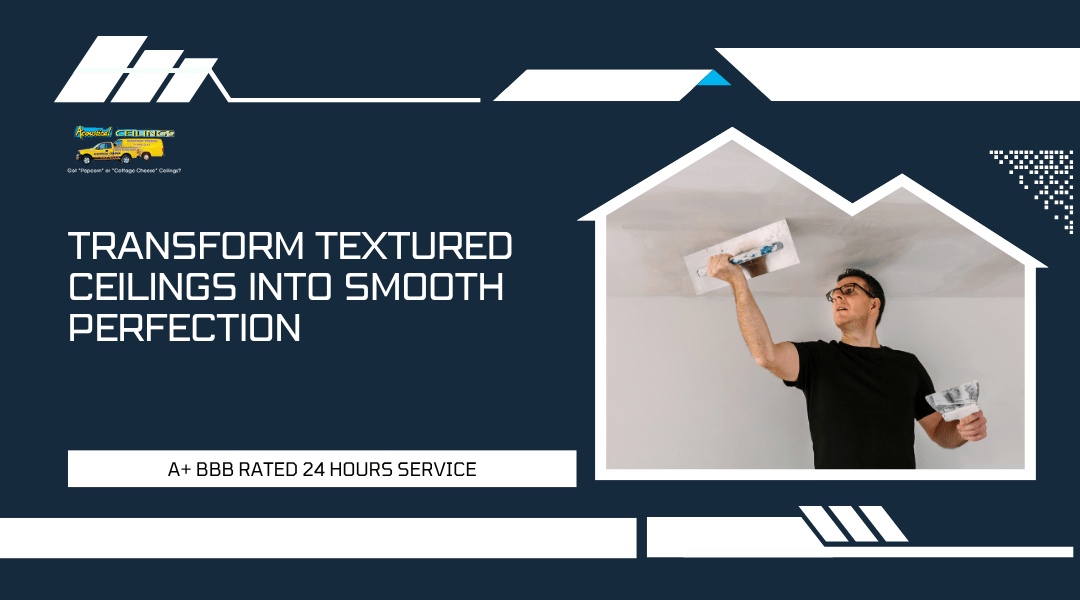
Skim coating involves applying a thin layer of joint compound over the textured ceiling. This method provides an even surface and is ideal for minor texture issues.
Begin by preparing the ceiling. Clean any debris and patch significant cracks. Next, mix the joint compound to a creamy consistency. Use a large drywall knife to spread the compound evenly over the surface. You may need to apply multiple coats. Allow each layer to dry completely before applying the next.
After the final coat, sand the surface lightly to ensure it is smooth. Use a pole sander for easy reach. This method is cost-effective and can yield excellent results if done properly.
Drywall Replacement for Severe Textures
If your textured ceiling has severe damage or appears too rough, drywall replacement might be the best choice. This option offers a fresh start with a brand-new surface.
Before starting, remove light fixtures, vent covers, and any other obstructions. Carefully take down the existing drywall, ensuring not to damage the underlying structure.
Once removed, install new drywall sheets. Secure them with screws, and be sure they are flush with the ceiling joists. After installation, tape the seams with joint tape and cover them with joint compound.
Finally, sand and finish the new drywall as you would for a newly installed ceiling. This method is more labor-intensive, but it provides a clean slate when a skim coat won’t suffice.
Sanding and Buffing for a Flawless Finish
Sanding and buffing can significantly improve the appearance of textured ceilings. This method is particularly effective if you want to reduce texture but not completely remove it.
To start, gather your tools, including a sanding pole and fine-grit sandpaper. Lightly sand the surface to minimize the texture. Be careful not to sand too aggressively, as this could damage the ceiling.
Once you’ve achieved the desired smoothness, it’s essential to clean away the dust before applying any finishes. After cleaning, you can buff the ceiling with a soft cloth to enhance the appearance.
This method can save time and effort, but it’s crucial to do it carefully to avoid uneven surfaces.
Tools and Materials Needed for Ceiling Smoothing
To achieve a smooth ceiling finish, you need the right tools and materials. This section will cover essential tools, the best joint compounds, and safety gear to ensure a successful project.
Essential Tools (Trowels, Drywall Knives, Sanders)
You will require specific tools for smoothing the ceiling. A trowel is vital for applying and feathering joint compound. Choose a stainless-steel or flexible trowel for a better finish. Drywall knives come in various sizes; using a 12-inch knife allows you to cover large areas efficiently.
Sanding tools are also critical. Use a pole sander or a hand sander with fine-grit sandpaper (around 120-150 grit) for polishing the compound once dry. A sanding block helps smooth out edges, ensuring an even surface. Proper tools will significantly enhance the finish quality.
Choosing the Right Joint Compound and Primers
The type of joint compound you select is crucial. For a smooth finish, use a lightweight all-purpose joint compound. It is easier to work with and dries quickly. Consider a setting-type compound for larger projects; it dries hard and reduces the risk of cracks.
Follow up with a primer. A high-quality drywall primer seals the surface and helps the paint adhere better. Choose a primer designed for ceilings to prevent yellowing or stains over time. This combination of tools and materials prepares your ceiling for a flawless topcoat.
Safety Gear for Ceiling Work
Safety gear is essential when working overhead. Start with a good pair of safety goggles to protect your eyes from flying dust and debris. A dust mask or respirator will help you avoid inhaling harmful particles while sanding or applying joint compound.
Additionally, use knee pads for comfort when working on raised surfaces. Hard-hat helmets can protect against accidental bumps. Having the right safety gear will make your project much safer and more comfortable. Always prioritize safety to ensure a successful outcome.
Step-by-Step Guide to Achieving a Smooth Ceiling Finish
Achieving a smooth ceiling involves careful preparation, the right materials, and precise techniques. You will learn how to prepare your space, remove existing texture, apply a skim coat, sand the surface, and finish with primer and paint for a sleek look.
Preparing the Room and Protecting Surfaces
Before you start, it’s important to prepare the room properly. Cover the floors with drop cloths to catch any debris or paint. Use painter’s tape to protect the edges of walls, light fixtures, and any trim.
Make sure to remove any furniture or cover it with sheets. Proper preparation will save you time and clean-up later.
Tools Needed:
- Drop cloths
- Painter’s tape
- Plastic sheeting for larger areas
Removing or Covering the Existing Texture
If your ceiling has texture, you have two options: remove it or cover it. To remove it, you can wet the surface with a spray bottle to loosen the texture. Use a drywall scraper to gently peel it away.
If removal is too labor-intensive, consider applying a skim coat over the texture. This method saves time. A skim coat will fill in the texture and create a flat surface.
Applying the First Layer of Skim Coat
For the skim coat, you’ll need joint compound and a trowel. Mix the compound according to the manufacturer’s instructions. Apply a thin layer using the trowel, starting at one corner and working your way across.
Make sure to apply evenly. The first layer will fill in imperfections but won’t be perfect. Let it dry completely, which usually takes about 24 hours.
Sanding and Perfecting the Surface
Once the first layer is dry, it’s time to sand the surface. Use a pole sander for hard-to-reach areas or hand sand in smaller sections. Sand lightly to avoid removing too much compound.
Wear a mask to protect yourself from dust. After sanding, wipe down the ceiling with a damp cloth to remove dust particles. Repeat the skim coat application if necessary for a smoother finish.
Priming and Painting for a Polished Look
To finish your ceiling, apply a primer first. This helps the paint adhere better and provides a uniform base. Use a roller for larger areas and a brush for edges.
After the primer dries, choose a ceiling paint in your desired color. A flat or matte finish works best to hide imperfections. Apply a second coat if needed for full coverage.
Ensuring these steps are followed will give you a polished ceiling that enhances the look of your entire room.
Cost of Achieving a Smooth Ceiling Finish
When planning to achieve a smooth ceiling finish, various factors influence the overall cost. Understanding these elements can help you make informed decisions regarding your ceiling project.
Factors That Affect the Cost (Ceiling Size, Texture Type, Labor)
The size of your ceiling is a significant factor in determining costs. Larger ceilings require more materials and more work, increasing expenses.
Texture type also plays a vital role. Removing an intricate texture takes longer and may require additional materials.
Labor costs vary based on complexity and region. Skilled labor for smoothing out ceilings could range from $40 to $100 per hour.
Including permit fees, repairs, and cleanup can further affect the total cost. Careful planning helps you stay within budget.
DIY vs. Hiring a Professional Contractor
Deciding whether to tackle this project yourself or hire a contractor can impact your costs significantly.
If you choose to DIY, you’ll save on labor costs, but you’ll need to invest time and effort. You might need tools like a sander, scraper, and primer, which can add costs.
On the other hand, hiring a professional ensures high-quality results and saves you time. It also reduces the risk of mistakes that might require costly fixes later.
Consult quotes from local contractors to compare prices. Evaluate your own skills before deciding.
Estimated Price Ranges in Rancho Cucamonga, California
In Rancho Cucamonga, the cost for achieving a smooth ceiling finish varies based on your specific needs. Generally, expect to pay between $1.50 and $3.50 per square foot for a complete job.
For an average 10×10 room, the total price may range from $150 to $350 without additional features or repairs.
If you opt for a more extensive remodel that includes both removal and installation, costs could rise significantly.
Collect estimates from local drywall contractors for the best pricing. They often provide detailed breakdowns of services included in the cost.
Benefits of Hiring a Professional Drywall Contractor
Hiring a professional drywall contractor provides several advantages. You gain access to their specialized skills, which help in achieving a perfect ceiling finish. Additionally, their experience can save you time and money. Lastly, a professional ensures that the results are durable and of high quality.
Expertise in Achieving a Flawless Finish
When you choose a professional drywall contractor, you benefit from their expertise. These contractors have extensive training and experience in various drywall techniques. They understand how to prepare surfaces properly and apply finishes effectively.
You can expect them to handle different textures and finishes that suit your style. They know how to blend joints and achieve a consistent look across the entire ceiling. This attention to detail makes a significant difference in the final appearance.
A professional will also be familiar with the best materials and tools to use. This knowledge can prevent common mistakes that might occur during a DIY project. The end result is a flawless ceiling that enhances the overall look of your space.
Time and Cost Efficiency Compared to DIY
While tackling a drywall project yourself might seem cost-effective, hiring a contractor often saves you time and money in the long run. Professionals complete jobs faster due to their skills and experience. They can quickly troubleshoot issues that may arise during the project.
DIY projects sometimes lead to unexpected costs. Mistakes may require more material or repairs, increasing your expenses. A professional contractor provides a detailed estimate, so you know what to expect financially.
In addition to saving time and costs, hiring a contractor reduces stress. You can focus on other important aspects of your home while they handle the work. This peace of mind is invaluable.
Ensuring Long-Lasting, High-Quality Results
Quality work is essential when it comes to drywall installation. A professional drywall contractor ensures that your ceiling finishes are not just aesthetically pleasing but also durable. They adhere to industry standards, using high-quality materials and techniques.
A well-installed ceiling can withstand the test of time, preventing issues like cracks and peeling. Professionals know how to create a moisture barrier, which is crucial in areas like kitchens and bathrooms.
Moreover, a contractor often provides warranties on their work. This means you have added assurance that the job will last. If any issues arise, you can rely on them to address them efficiently.
By hiring a professional, you secure results that elevate your home’s value and appeal.
Conclusion
Achieving a smooth ceiling finish requires careful planning and execution. Start with the right materials and tools for the job. Make sure to choose a quality drywall contractor.
When moving from textured to sleek ceilings, consider these key steps:
- Preparation: Clear the area and protect your furnishings.
- Repair: Fix any cracks or holes in the existing ceiling.
- Sanding: Use sandpaper to create a smooth surface.
- Priming: Apply a primer to ensure good paint adhesion.
- Finishing: Choose the right paint for a sleek look.
Hiring a professional can make the process easier. A skilled drywall contractor can transform your space effectively, ensuring a flawless finish. If you’re in the Rancho Cucamonga area, consider checking out Acoustical Ceilings Inc for expert assistance.
With the right approach, your ceiling can enhance the beauty of your home. Focus on these steps, and you will see satisfying results.