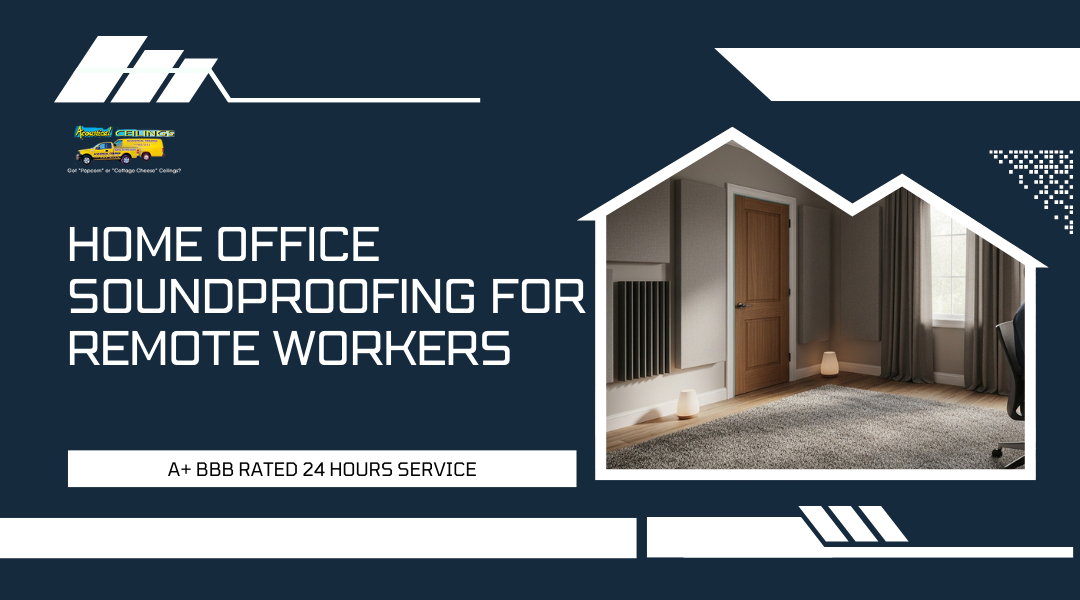
Working from home in Rancho Cucamonga brings many benefits, but noise problems can hurt your focus and productivity. You might hear traffic from nearby freeways, neighbors talking, or sounds traveling through thin walls and ceilings. These sounds make it hard to stay focused during important calls or deep work.
Soundproofing your home office ceiling and walls can block unwanted noise and create a quiet space where you can work without distractions. The right ceiling and wall treatments absorb sound and stop it from moving between rooms. These solutions work for renters and homeowners who need better sound control in their workspace.
This guide covers practical soundproofing methods that address common noise challenges in home offices. You’ll learn about ceiling techniques that reduce overhead sounds, wall treatments that boost privacy, and real examples from local projects in Rancho Cucamonga. These proven strategies help remote workers build a professional workspace at home.
Noise Challenges In Home Office Setups
Remote workers in Rancho Cucamonga face distinct noise challenges from airborne sounds traveling through shared walls and impact noises from footsteps or dropped items. The acoustic properties of typical local homes also create reverberation issues that make it harder to maintain a quiet workspace.
Airborne Versus Impact Sounds From Shared Living Spaces
Airborne sounds travel through the air before reaching walls, ceilings, and doors in your home office. These include voices from conversations, television audio, music, and outdoor traffic noise common in Rancho Cucamonga neighborhoods. Your walls act as barriers, but sound waves can pass through them depending on their STC (Sound Transmission Class) rating.
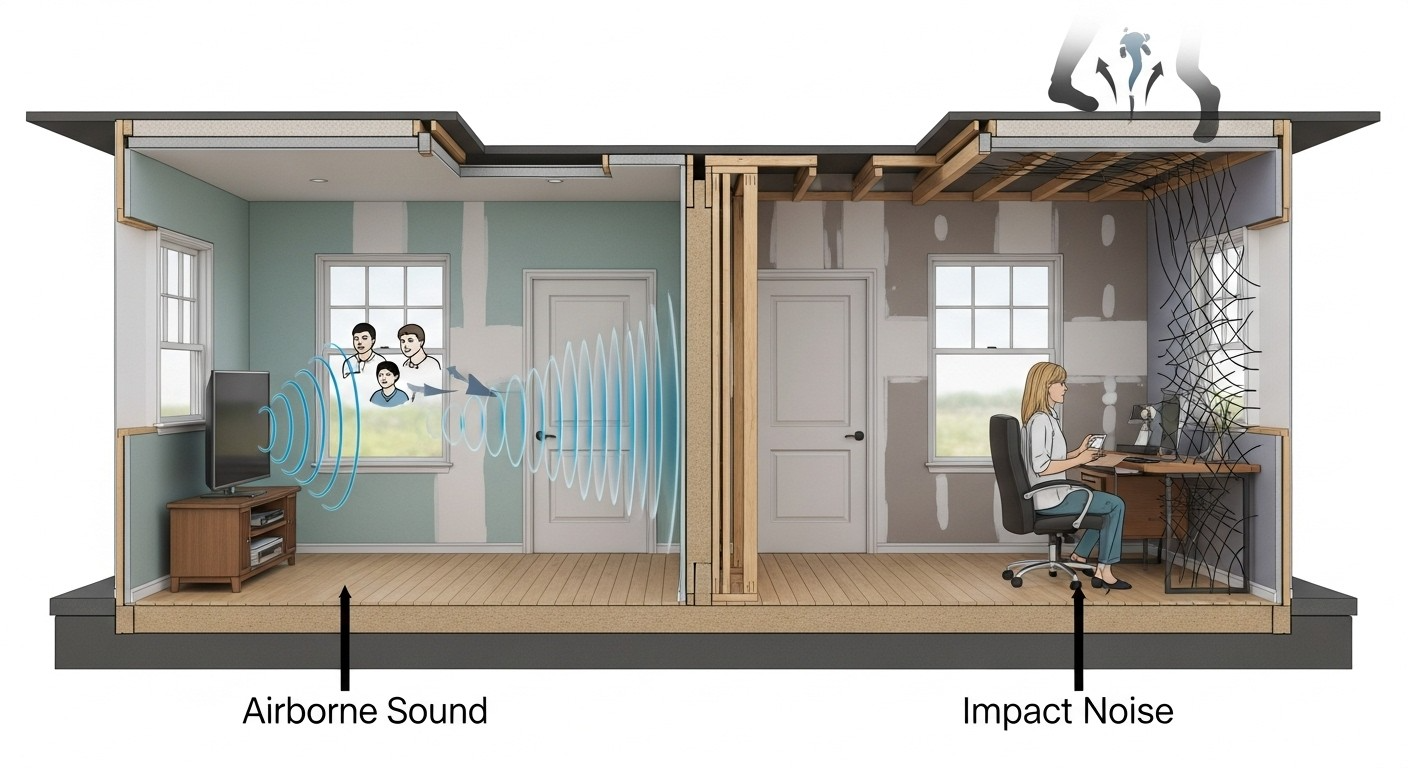
Impact sounds result from physical contact with building surfaces. Footsteps on floors above your office, doors slamming, or objects dropping create vibrations that travel through the structure itself. These are harder to control than airborne noise because they bypass air gaps and move directly through solid materials.
Understanding the difference helps you choose the right soundproofing approach. Airborne noise reduction requires adding mass and sealing gaps, while impact sounds need vibration dampening materials. Most home offices deal with both types, so your sound control strategy should address each separately for effective office soundproofing.
Reverberation Effects In Typical Rancho Cucamonga Residences
Many Rancho Cucamonga homes feature hard surfaces like tile floors, drywall, and large windows that reflect sound waves instead of absorbing them. When sound bounces repeatedly between these surfaces, it creates reverberation that makes your workspace feel louder and more chaotic. This echo effect reduces speech clarity during video calls and makes it difficult to focus.
Rooms with minimal furniture or soft materials experience worse reverberation problems. Empty corners and bare walls give sound nowhere to dissipate. The result is a workspace that amplifies every keyboard click, phone notification, and background noise.
You can measure reverberation by clapping once and listening for how long the sound lingers. A peaceful environment should have minimal echo. Adding acoustic panels, rugs, curtains, and upholstered furniture helps absorb sound waves and creates a quieter environment for productive work.
Ceiling Soundproofing Techniques That Perform
Reducing noise from above requires combining mass, absorption, and decoupling methods to address both airborne sounds like voices and impact noise from footsteps. Professional-grade acoustic tiles paired with resilient channels create physical separation from structural vibration, while strategic insulation layering blocks multiple noise frequencies including HVAC transmission.
Acoustic Tiles And Resilient Channels For Overhead Isolation
Acoustic tiles provide sound absorption through their porous structure, with ratings measured by NRC (Noise Reduction Coefficient) values between 0.50 and 0.95. Higher NRC ratings mean better absorption of airborne noise. You should install these tiles in a grid system that doesn’t attach directly to ceiling joists.
Resilient channels create sound isolation by decoupling your ceiling drywall from the structural framing above. These metal tracks clip onto existing joists and hold drywall panels without direct contact, interrupting vibration pathways. Install channels perpendicular to joists at 24-inch spacing for optimal performance.
The combination of acoustic tiles and resilient channels addresses different noise types simultaneously. Impact noise from footsteps travels through structural connections, which resilient channels disrupt. Airborne noise like conversations passes through air spaces, which acoustic tiles absorb. This dual approach typically achieves 15-20 decibel reduction in your home office.
Insulation Layering To Block Footfall And HVAC Transmission
Mineral wool or fiberglass insulation fills ceiling cavities to dampen sound traveling between floors. Dense insulation materials with ratings of R-19 or higher work best for soundproofing purposes. Install insulation loosely without compression, as packed material loses its sound absorption capability.
HVAC systems transmit noise through air ducts that connect multiple rooms and floors. You can add duct liner material inside metal ductwork or switch rigid ducts to flexible versions that reduce sound transmission. Wrap exterior duct surfaces with mass loaded vinyl for additional blocking.
Layer different materials to target specific frequencies. Combine fiberglass batts between joists with a layer of 5/8-inch drywall, then add damping compound like Green Glue before installing a second drywall layer. This creates approximately 8-10 pounds of mass per square foot, which blocks low-frequency rumble from footsteps above your workspace.
Wall Treatments Enhancing Privacy
Speech privacy matters most in home offices where confidential calls and virtual meetings happen daily. Adding mass and damping materials to your walls stops voices from traveling through shared spaces and keeps sensitive conversations contained.
Double Drywall With Damping Compounds For Speech Containment
Adding a second layer of drywall creates more mass for sound to travel through. When you sandwich a damping compound like Green Glue between two drywall sheets, you stop vibrations that carry voices through walls.
The compound stays flexible after it dries. This means it converts sound energy into small amounts of heat instead of letting it pass through. You apply it directly to the back of the second drywall sheet before mounting.
This method works well for speech frequencies between 125 Hz and 4,000 Hz. That range covers normal conversation and phone calls. The combination blocks sound better than acoustic panels or acoustic foam alone.
You need roughly two tubes of damping compound per 4×8 sheet. Cover about 80% of the surface in random patterns for best results.
Mass-Loaded Vinyl Integration Behind Standard Finishes
Mass-loaded vinyl (MLV) adds dense material without taking up wall space. You hang it directly on studs or existing drywall before adding your finish layer. MLV typically weighs one or two pounds per square foot.
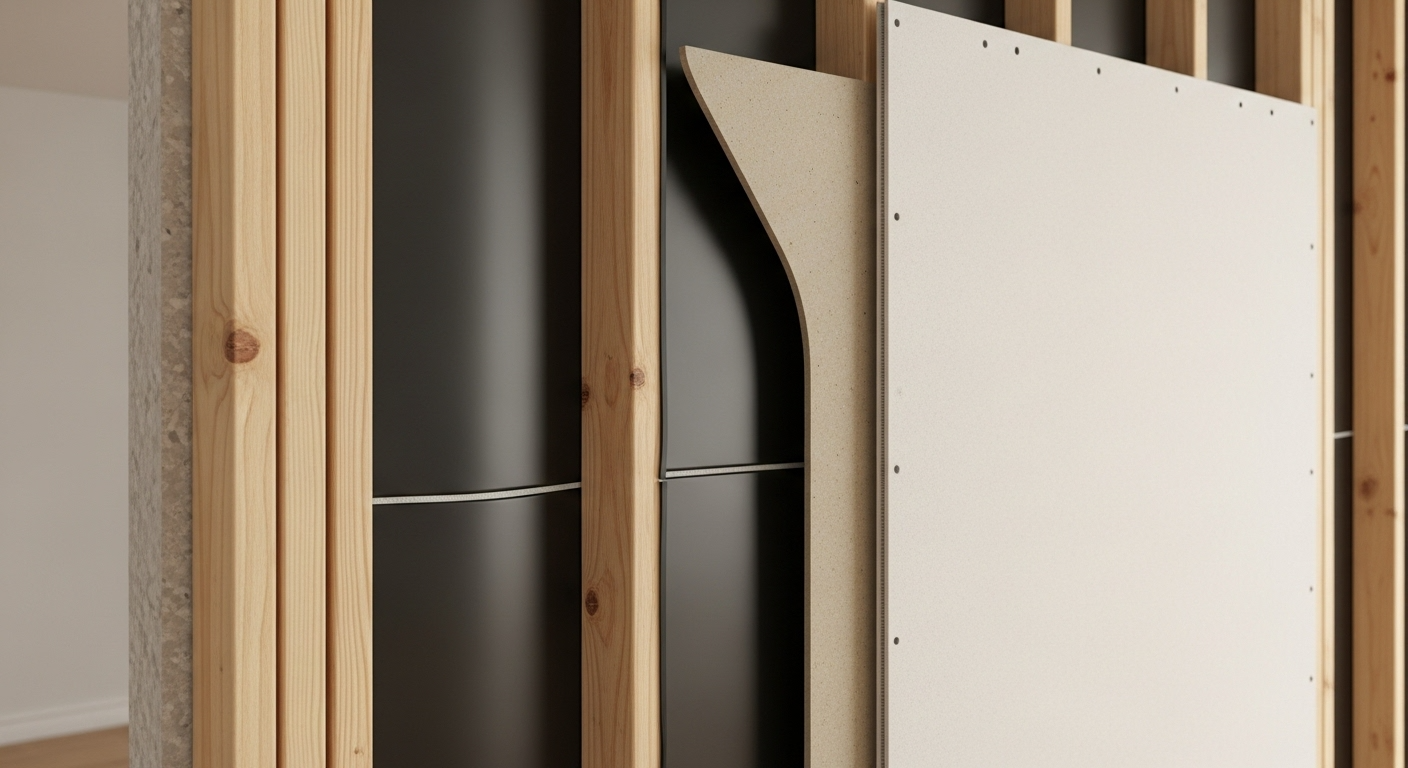
The material blocks sound through sheer density. Unlike acoustic treatment products that absorb echoes, MLV stops sound from passing through walls entirely. It works especially well when combined with acoustic partitions or soundproof curtains.
You can staple or nail MLV to wall framing. Overlap seams by at least two inches and seal them with acoustic caulk. This prevents gaps that leak sound.
MLV costs more upfront than standard insulation but requires less thickness. A single layer under your drywall improves speech privacy without rebuilding walls or adding acoustic panels throughout the room.
Insights From Local Acoustical Ceiling Applications
Rancho Cucamonga homes present specific challenges that require targeted acoustical ceiling solutions based on local building types and common noise sources. Understanding regional construction methods helps you select materials and designs that perform well while enhancing your space.
Tailoring Solutions To Regional Construction And Noise Profiles
Rancho Cucamonga features a mix of newer stucco homes and older wood-frame construction. Each type requires different approaches to ceiling soundproofing. Newer homes often have vaulted ceilings that amplify sound, while older properties may have thinner ceiling materials that allow noise to pass through easily.
Local traffic from the I-15 and nearby Ontario Airport creates consistent low-frequency noise. You need acoustic tiles with higher density ratings to block these sounds effectively. Mineral wool insulation works particularly well in this climate because it maintains its sound-absorbing properties in warm temperatures.
Many Rancho Cucamonga homes share walls with neighbors or have second-story rooms above workspaces. Installing a drop ceiling with acoustic tiles rated for impact noise reduction addresses footstep sounds from above. Fiberglass insulation combined with acoustic panels provides the best results for homes near busy streets like Foothill Boulevard or Haven Avenue.
Acoustical Ceilings’ Textured And Decorative Options For Dual Function
Acoustical ceilings now come in designs that match popular Southern California home styles. Wood-grain acoustic panels suit craftsman-style homes common in older Rancho Cucamonga neighborhoods. You can find tiles that mimic exposed beam ceilings while still absorbing sound waves.
Fabric-wrapped panels come in earth tones that complement desert-inspired interiors. These options reduce noise by up to 80% while adding visual interest to your home office. Perforated metal tiles offer a modern look for contemporary spaces and provide excellent sound absorption.
Some acoustic tiles feature textured surfaces that hide imperfections in existing ceilings. You don’t need to repair minor cracks or stains before installation. Grid systems allow you to mix tile colors and create custom patterns that reflect your style while improving acoustics in your workspace.